每个对话都包含 中文翻译、核心词汇/短语 和 文化小贴士,帮助您更深入地理解。
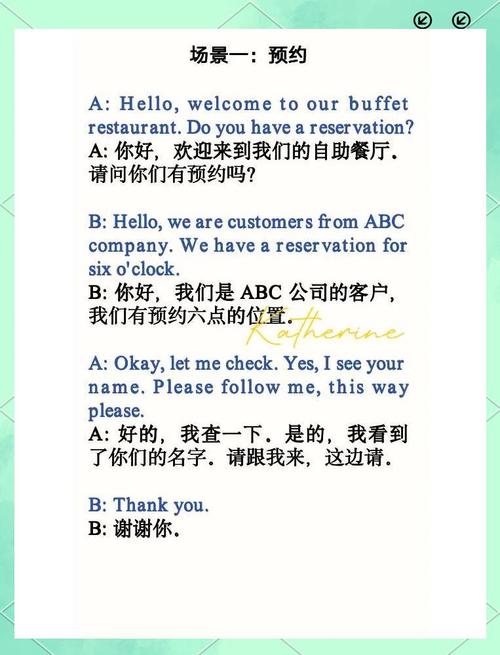
课程咨询与报名
场景: 学生来到英语培训中心前台,向课程顾问咨询课程信息。
Characters:
- Student (S): 学生
- Course Consultant (C): 课程顾问
Dialogue:
S: Excuse me, I'm interested in taking an English course here. Could you tell me what options you have?
S: 你好,我对在这里上英语课程很感兴趣,能告诉我你们有哪些课程选择吗?
C: Of course! Welcome to our center. We offer a variety of courses, including General English, Business English, and IELTS/TOEFL preparation. What is your main goal for learning English?
C: 当然欢迎!我们中心提供多种课程,包括通用英语、商务英语以及雅思/托福备考课程,您学习英语的主要目标是什么呢?
S: I want to improve my conversational skills for my job. I work in an international company, and I often need to communicate with foreign colleagues.
S: 我想提升我的口语技能,是为了工作,我在一家外企工作,经常需要和外国同事沟通。
C: I see. In that case, our Business English or Conversation Class would be perfect for you. The Conversation Class focuses more on real-life situations, like small talk, meetings, and presentations.
C: 我明白了,这样的话,我们的商务英语或口语会话课非常适合您,口语会话课更侧重于真实生活场景,比如日常闲聊、会议和演讲。
S: That sounds great. What are the class schedules and fees?
S: 听起来不错,课程安排和费用是怎样的?
C: We have classes in the morning, afternoon, and evening. For example, the Conversation Class is held on Tuesdays and Thursdays from 7 PM to 9 PM. The course fee is 3,000 RMB for a 12-week program.
C: 我们有上午、下午和晚上的班,口语会话课是每周二、周四晚上7点到9点,课程费用是3000元,为期12周。
S: Okay. And what's the class size? I prefer a smaller class with more interaction.
S: 好的,班级规模有多大?我更喜欢小班,能有更多互动。
C: Our maximum class size is 12 students, so you'll get plenty of opportunities to speak. Would you like to take a free trial lesson to see if you like it?
C: 我们每班最多12名学生,所以您会有很多开口说英语的机会,您想免费试听一节课看看吗?
S: Yes, that would be fantastic! How can I sign up for the trial lesson?
S: 好的,那太棒了!我该如何报名试听呢?
C: Please fill out this registration form. We'll then confirm the time and date for your trial class via email or phone call.
C: 请填写这份报名表,之后我们会通过邮件或电话确认您试听课程的具体时间。
S: Thank you for your help.
S: 谢谢你的帮助。
C: You're welcome. We look forward to seeing you here!
C: 不客气,期待您的光临!
核心词汇/短语:
- Course options: 课程选择
- Main goal: 主要目标
- Conversational skills: 口语技能
- Business English: 商务英语
- IELTS/TOEFL preparation: 雅思/托福备考
- Real-life situations: 真实生活场景
- Small talk: 闲聊,寒暄
- Class schedules: 课程安排
- Fees / Tuition: 费用
- Class size: 班级规模
- Free trial lesson: 免费试听课
- Registration form: 报名表
文化小贴士: 在英语国家,咨询课程时直接问 "What's your class size?" (班级规模多大?) 是非常正常且被鼓励的,这表明你是一个积极主动、注重学习质量的学生,课程顾问也通常会主动提供这类信息,因为这直接关系到教学质量和学生的满意度。
课堂互动与提问
场景: 在英语口语课上,老师正在讲解关于 "Travel" (旅行) 的主题。
Characters:
- Teacher (T): 老师
- Student A (A): 学生A
- Student B (B): 学生B
Dialogue:
T: Good morning, everyone! Today's topic is "Travel". Let's start with a warm-up question. Can you tell me about the best trip you've ever taken?
T: 大家早上好!今天的话题是“旅行”,我们先来个热身问题,谁能告诉我你经历过的最棒的一次旅行?
A: I can! Last summer, I went to Bali, Indonesia. It was amazing! The beaches were beautiful, and the local food was delicious.
A: 我可以!去年夏天,我去了印度尼西亚的巴厘岛,太棒了!海滩非常美,当地的食物也很美味。
T: That sounds wonderful! What was the most memorable part of your trip?
T: 听起来很棒!你旅行中最难忘的部分是什么?
A: Hmm, I think it was watching the sunset at Uluwatu Temple. The view was breathtaking.
A: 嗯,我想是在乌鲁瓦图寺看日落,那个景色美得让人窒息。
T: Excellent! Thank you for sharing, A. How about you, B? Have you traveled anywhere interesting recently?
T: 太棒了!谢谢你分享,A,你呢,B?最近去过什么有趣的地方吗?
B: Yes, I went to a small town in Yunnan province. It's very different from the big city. The air is fresh, and life is much more relaxed.
B: 是的,我去了云南的一个小镇,那里和大城市很不一样,空气很新鲜,生活节奏也慢很多。
T: That's a great point. Travel can also be about experiencing a different pace of life. B, you mentioned the air is fresh. Could you tell us more about that?
T: 说得很好,旅行也可以是体验一种不同的生活节奏,B,你刚才说空气很新鲜,能多给我们讲讲吗?
B: Of course. In the town, there are no tall buildings or heavy traffic. You can hear the birds singing in the morning. It's very peaceful.
B: 当然可以,镇上没有高楼大厦,也没有很重的交通,早上能听到鸟叫声,非常宁静。
T: Beautiful description, B. I can almost feel it. Thank you. Now, let's move on to the next activity...
T: 描述得很美,B,我仿佛身临其境了,谢谢,我们进行下一个活动...
核心词汇/短语:
- Warm-up question: 热身问题
- Best trip you've ever taken: 你经历过的最棒的旅行
- Memorable part: 难忘的部分
- Breathtaking view: 令人窒息的景色
- How about you? / What about you? 你呢?
- Different pace of life: 不同的生活节奏
- Relaxed: 放松的
- Peaceful: 宁静的
- Could you tell us more about that? 你能多给我们讲讲那个吗?
- Move on to the next activity: 进入下一个活动
文化小贴士: 在西方课堂文化中,鼓励学生提问和参与讨论是教学的核心部分,老师会使用开放式问题 (open-ended questions) 来激发学生的思考,而不是简单的 "Yes/No" 问题,当学生回答问题时,老师通常会给予积极的反馈,并追问细节,这被称为 "probing" (探究),目的是帮助学生更深入地表达自己,大胆地举手发言和分享你的想法是被高度赞赏的。
请假与请假后跟进
场景: 学生因为生病需要请假,并在病好后向老师和同学询问 missed assignments (错过的作业)。
Characters:
- Student (S): 学生
- Teacher (T): 老师
- Classmate (C): 同学
Dialogue (Part 1: Asking for Leave):
S: (Knocking on the teacher's office door) Excuse me, Professor Lee.
S: (敲老师办公室的门) 打扰一下,李老师。
T: Come in, S. What can I do for you?
T: 请进,S,有什么事吗?
S: I'm not feeling well today. I think I have a fever and a bad headache. I would like to ask for a leave of absence from today's class.
S: 我今天感觉不舒服,好像是发烧了,还头疼得很厉害,我想请今天这节课的假。
T: I'm sorry to hear that. You should go home and get some rest. Is there anything I can do to help? Do you need a doctor's note?
T: 很遗憾听到你这样,你应该回家好好休息,有什么我能帮忙的吗?需要医生开的病假条吗?
S: Thank you, Professor. I think I just need to rest. I will email you the doctor's note if it's necessary. I'm worried about missing the lesson. What did you cover today?
S: 谢谢老师,我想我只需要休息一下,如果需要的话,我会把病假条发给您邮件,我有点担心错过课程,今天讲了什么内容?
T: We covered Chapter 5, "Email Writing". I've uploaded the PowerPoint slides and the homework assignment to our class website. Please check it when you feel better.
T: 我们讲了第五章“邮件写作”,我已经把PPT课件和作业上传到我们的班级网站上了,等你感觉好一些的时候请查看一下。
S: Thank you so much, Professor. I appreciate it.
S: 非常感谢您,老师,太感激了。
T: No problem. Get well soon!
T: 不客气,早日康复!
Dialogue (Part 2: Catching up with a Classmate):
S: Hi C, long time no see. How was the class yesterday?
S: 嗨,C,好久不见,昨天的课怎么样?
C: Hey S! I heard you were sick. I hope you're feeling better now.
C: 嘿,S!我听说你生病了,希望你现在已经好些了。
S: Yes, much better, thank you. I missed the class on email writing. Could you please help me catch up? I'm a bit lost.
S: 是的,好多了,谢谢,我错过了邮件写作的课,你能帮我补一下课吗?我有点跟不上。
C: Of course! It was pretty important. The teacher showed us the key components of a formal email: a clear subject line, a proper greeting, the body, and a polite closing. For homework, we have to write an email to a potential client.
C: 那部分内容还挺重要的,老师给我们讲了正式邮件的关键组成部分:清晰的邮件主题、恰当的称呼、正文以及礼貌的结尾,作业是我们要给一位潜在客户写一封邮件。
S: That's very helpful. Thanks a lot! Do you mind sending me the slides?
S: 太有帮助了,非常感谢!你介意把PPT发给我吗?
C: Not at all. I'll send them to you right away.
C: 当然不介意,我马上发给你。
S: You're a lifesaver! I owe you one.
S: 你真是我的救星!欠你一个人情。
核心词汇/短语:
- Ask for a leave of absence: 请假
- Not feeling well / Feel sick: 身体不舒服
- Fever / Headache: 发烧 / 头疼
- Doctor's note / Sick note: 病假条
- Cover (in a lesson): (课程中) 讲了……
- Upload / Download: 上传 / 下载
- Slides / PowerPoint: 幻灯片 / PPT
- Homework assignment: 作业
- Catch up / Catch up on: 补上(错过的内容)
- Be lost: 跟不上,迷惑
- Key components: 关键组成部分
- Formal email: 正式邮件
- I owe you one: 我欠你一个人情
文化小贴士: 在英语学习环境中,主动承担个人学习责任非常重要,请假后,学生需要自己主动询问错过的内容和作业,而不是等待老师或同学来提供,同学之间互相帮助是非常普遍和被鼓励的,当你需要帮助时,礼貌地提出请求 (e.g., "Could you please help me..."),并在得到帮助后真诚地感谢对方 (e.g., "You're a lifesaver!"),是建立良好人际关系的关键。
反馈与建议
场景: 课程即将结束,老师邀请学生对课程进行反馈。
Characters:
- Teacher (T): 老师
- Student (S): 学生
Dialogue:
T: Good morning, class. As our course is coming to an end, I'd like to ask for your feedback. Your honest opinions will help us improve our courses in the future. Is there anything you liked or didn't like about this class?
T: 同学们早上好,我们的课程即将结束,我想请大家提供一些反馈,你们的真诚意见将帮助我们未来改进课程,对于这门课,有什么你喜欢或不喜欢的吗?
S: Thank you for asking. I really enjoyed this class. The teacher was very patient and encouraging.
S: 谢谢您询问,我真的很喜欢这门课,老师非常有耐心,并且经常鼓励我们。
T: I'm so glad to hear that! What about the teaching materials and activities? Were they helpful?
T: 听到这个我太高兴了!那教材和活动呢?它们有帮助吗?
S: Yes, the materials were very practical. I especially liked the role-plays. They helped me a lot with my confidence. However, I think we could have had more time for group discussions.
S: 是的,教材非常实用,我特别喜欢角色扮演活动,它们极大地提升了我的自信心,我觉得我们可以有更多的时间进行小组讨论。
T: That's a very valuable suggestion, S. Group discussions are indeed important. We will try to allocate more time for them in the next term. Thank you for your constructive feedback.
T: S,这个建议非常有价值,小组讨论确实很重要,我们会在下个学期尝试分配更多的时间进行,感谢你提出的建设性意见。
S: You're welcome. Overall, it was a great learning experience for me.
S: 不客气,这是我一次很棒的学习经历。
T: I'm happy to hear that. Thank you all for your hard work and participation throughout the course. Have a wonderful day!
T: 听到这个我非常高兴,感谢大家在整个课程中的努力和参与,祝大家有美好的一天!
核心词汇/短语:
- Feedback / Suggestions: 反馈 / 建议
- Honest opinions: 真诚的意见
- Improve our courses: 改进我们的课程
- Patient and encouraging: 有耐心且鼓励人的
- Teaching materials: 教材
- Role-plays: 角色扮演
- Build confidence: 建立信心
- Group discussions: 小组讨论
- Constructive feedback: 建设性的反馈
- Valuable suggestion: 有价值的建议
- Learning experience: 学习经历
文化小贴士: 在西方教育体系中,学生反馈被视为改进教学质量的重要环节,老师会真诚地希望听到学生的批评和建议,尤其是 "constructive feedback" (建设性反馈),提出具体、有针对性的建议(如“希望增加小组讨论时间”)比泛泛的抱怨(如“课程很无聊”)更有价值,也更能被老师接受和采纳,这体现了你对学习的投入和对课程的责任感。
希望这些情景对话对您有帮助!您可以根据自己的具体需求,选择并练习这些对话。
标签: 英语情景对话实战训练技巧 提升英语对话实战能力方法 情景对话英语实战能力提升