第一部分:议论文核心结构
一篇标准的英语议论文通常遵循“五段式”结构,即:
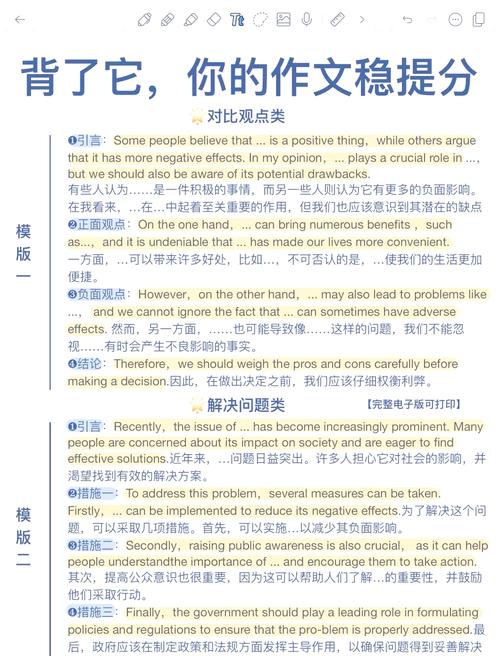
- 引言段
- 主体段 1
- 主体段 2
- 主体段 3 (可选,或与主体段2合并)
- 结论段
第二部分:万能模板与高分句式
你可以根据这个模板和句式,填充自己的论点和论据。
引言段
目标: 引入话题,明确观点,概述文章结构。
-
背景引入句:
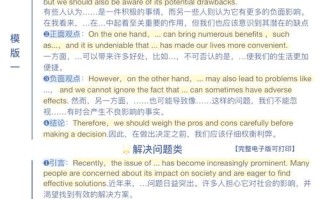
In contemporary society, the issue of... has sparked a heated debate.(在当代社会,……的问题引发了激烈的辩论。)With the rapid development of technology, a growing number of people are concerned about...(随着科技的飞速发展,越来越多的人开始关注……)Nowadays, there is a growing tendency for people to...(人们越来越倾向于……)
-
争议陈述句:
 (图片来源网络,侵删)
When it comes to this topic, opinions are divided.(当谈到这个话题时,人们意见不一。)People's views on this issue vary greatly.(人们对这个问题的看法大相径庭。)
-
亮明观点句:
From my perspective, I am in favor of the former/latter view.(在我看来,我支持前/后一种观点。)As far as I am concerned, I believe that...(就我而言,我相信……)This essay will argue that...(本文将论证……)
-
文章结构句:
In the following essay, I will elaborate on the reasons for my stance by analyzing two main aspects.(在下文中,我将通过分析两个方面来详细阐述我立场的理由。)This essay will first discuss the benefits of... and then analyze its potential drawbacks.(本文将首先讨论……的好处,然后分析其潜在的缺点。)
主体段
目标: 每段集中阐述一个分论点,并提供充分的论据支持。
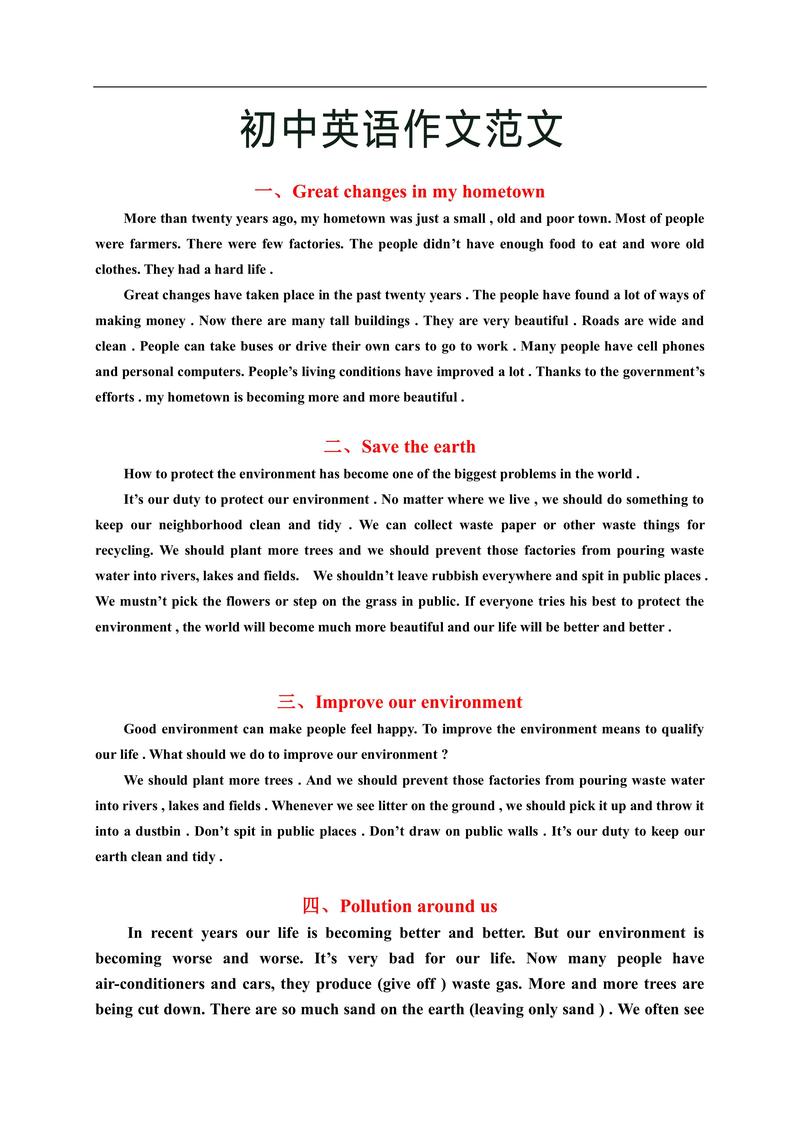
结构: 主题句 + 论据 + 解释 + 小结
-
主题句:
The primary reason for my support is that...(我支持的首要原因是……)Another significant advantage is that...(另一个显著的优点是……)On the contrary, those who hold the opposite view argue that...(相反,持相反观点的人认为……)However, this argument is flawed for several reasons.(这一论点有几个缺陷。)
-
论据:
To illustrate, a case in point is...(为了说明,一个恰当的例子是……)For instance, according to a recent survey conducted by..., ...(根据……最近进行的一项调查,……)A compelling example can be found in the field of...(在……领域,一个有力的例子可以找到。)
-
解释与分析:
This is because...(这是因为……)The underlying reason for this phenomenon is that...(这一现象的根本原因在于……)Therefore, it is evident that...(很明显……)
-
小结句:
Thus, this point strongly reinforces my initial argument.(这一点强烈地支持了我的初始论点。)In light of the above, it is reasonable to conclude that...(鉴于以上所述,可以合理地得出结论……)
结论段
目标: 总结全文,重申观点,升华主题,避免引入新论点。
-
总结论点句:
In conclusion, taking all the aforementioned factors into account, we can safely draw the conclusion that...(考虑到上述所有因素,我们可以有把握地得出结论……)To sum up, while... has its merits, its drawbacks should not be overlooked.(尽管……有其优点,但其缺点也不容忽视。)All in all, the benefits of... far outweigh its potential risks.(……的好处远远大于其潜在的风险。)
-
重申观点句:
Therefore, I reiterate my firm belief that...(我重申我坚定的信念,即……)Given the analysis above, it is clear that my position is well-founded.(鉴于以上的分析,我的立场是站得住脚的。)
-
升华/展望句:
It is imperative for us to strike a balance between... and...(我们必须在……和……之间取得平衡。)Only by doing so can we...(只有这样我们才能……)Looking ahead, it is crucial for individuals and society to...(展望未来,个人和社会……至关重要。)
第三部分:经典范文
我们以一个经典题目为例:Should university education be free for everyone? (大学教育应该对所有人免费吗?)
范文观点: 支持大学教育免费。
The Case for Free University Education**
Introduction In an era where knowledge is increasingly recognized as a primary driver of economic growth and social progress, the accessibility of higher education has become a pivotal topic for public debate. While some contend that university education should be a personal financial responsibility, I firmly believe that making it free for everyone is a necessary investment in a nation's future. This essay will elaborate on this perspective by examining two key benefits: promoting social equality and fostering a more competitive and innovative workforce.
Body Paragraph 1 The foremost advantage of free university education is its potential to dismantle the barriers of social inequality. Currently, the exorbitant cost of tuition and living expenses often acts as a deterrent for talented individuals from low-income backgrounds, regardless of their academic potential. As a result, higher education becomes a privilege reserved for the wealthy, perpetuating a cycle of disadvantage. By removing financial obstacles, a tuition-free system would ensure that admission is based solely on merit and aspiration. For instance, a gifted student from a deprived family would have the same opportunity to pursue medicine or engineering as their affluent peers, thereby creating a more just and meritocratic society.
Body Paragraph 2 Furthermore, providing free university education is a strategic move to enhance a country's global competitiveness. In today's knowledge-based economy, a nation's human capital is its most valuable asset. When the government subsidizes higher education, it directly invests in developing a highly skilled and innovative workforce. Graduates are more likely to drive technological advancements, conduct groundbreaking research, and start new businesses that stimulate economic growth. For example, countries like Germany and Norway, which offer low-cost or free higher education, consistently rank high in innovation indices. This demonstrates that a well-educated populace is not just a social good but also a powerful engine for national prosperity.
Conclusion In conclusion, the implementation of free university education is far more than a mere financial policy; it is a fundamental investment in social justice and economic vitality. By promoting equal opportunity and cultivating a superior talent pool, societies can unlock the full potential of all their citizens. Therefore, it is imperative for governments to prioritize this initiative, paving the way for a more equitable and prosperous future for generations to come.
第四部分:高分词汇与短语替换
| 中文意思 | 普通词汇 | 高分词汇/短语 |
|---|---|---|
| 重要的 | important | crucial, vital, pivotal, significant, indispensable |
| 好处/优点 | good, advantage | benefit, merit, asset, strength, upside |
| 坏处/缺点 | bad, disadvantage | drawback, shortcoming, pitfall, downside, demerit |
| 问题 | problem | issue, dilemma, predicament, challenge |
| 很多人 | many people | a host of individuals, a growing number of people, the public |
| 显示 | show | demonstrate, illustrate, reveal, indicate, manifest |
| 因为 | because | due to, owing to, attributable to, given that, considering that |
| 然而 | but | however, nevertheless, nonetheless, conversely, on the contrary |
| 我认为 | I think | I am convinced that, I firmly believe that, I contend that, I posit that |
| 其次 | First/Second | Firstly/Secondly, The primary reason is..., Another significant point is... |
| In short | In conclusion, To sum up, In a nutshell, All in all, To wrap up |
写作小贴士:
- 结构清晰: 严格按照五段式结构来写,确保逻辑连贯。
- 观点明确: 在引言段就亮明你的立场,不要模棱两可。
- 论据充分: 每个主体段只讲一个观点,用具体的例子、数据或事实来支撑。
- 语言多样: 避免重复使用简单的词汇和句式,多使用高分词汇和复杂句式(如从句、倒装句等)。
- 检查语法: 写完后务必仔细检查,避免拼写和语法错误。
希望这份详细的指南能对你有所帮助!祝你写作顺利!
标签: 议论文模板高效使用方法 议论文范文结构借鉴技巧 议论文写作模板与范文解析